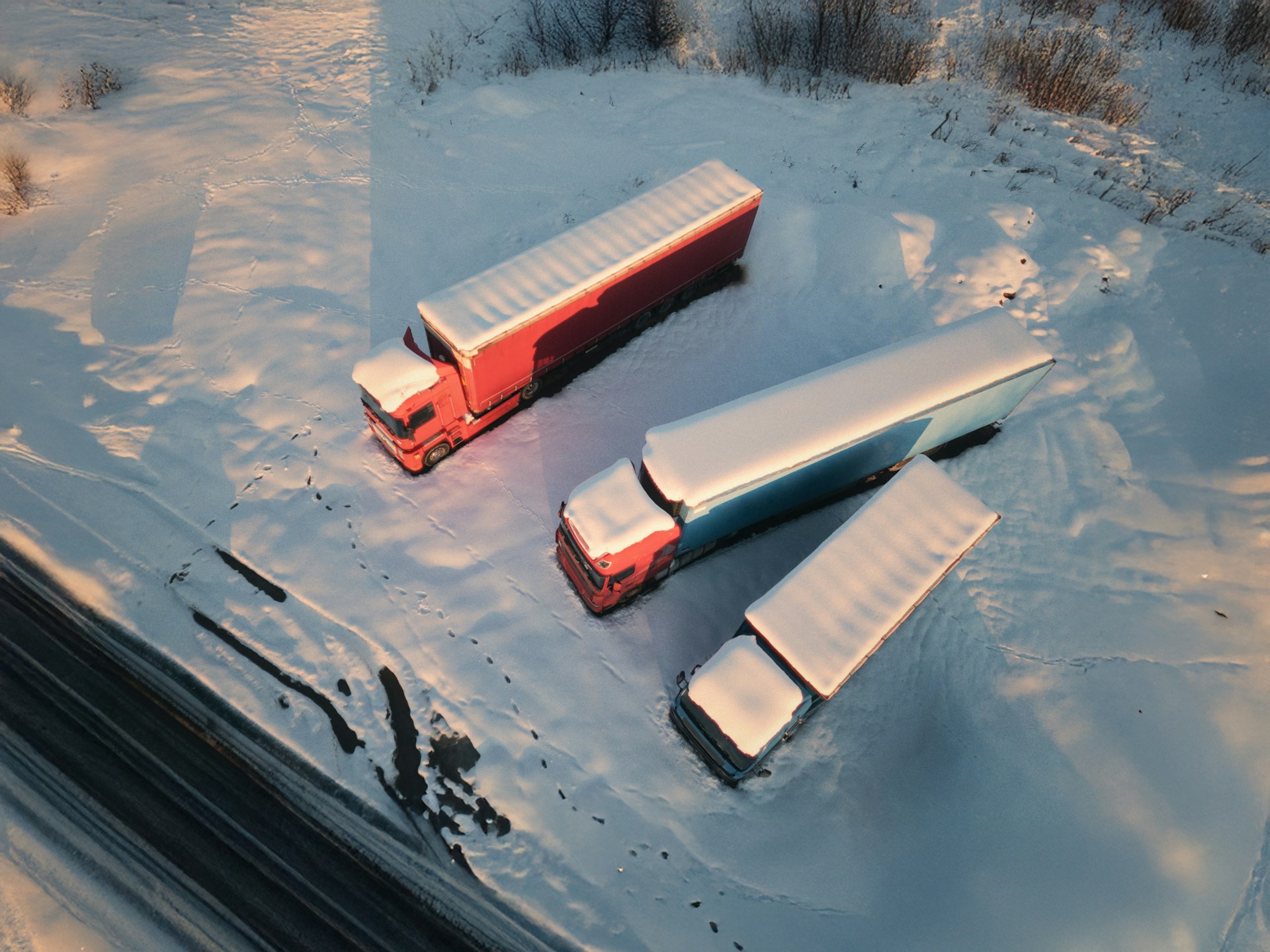
Paint below zero: the costs and inefficiencies of transporting and storing liquids in cold climates
cold-chain-logistics freight-optimization paint-shipping-challenges solid-paints supply-chain-resilience sustainable-freightWhen we think about the challenges of construction and decorating in cold-climate regions—such as the Nordic countries, Canada, Iceland or high mountain areas—the conversation usually centres on the thermal insulation of façades or the weather resistance of materials. However, one of the most complex and costly bottlenecks occurs before the product ever reaches the wall: the logistics, transport and storage of coatings during the winter months.
In the conventional emulsion paint industry, water acts as the mixture’s main carrier. But water has an unavoidable physical property: it freezes when it reaches 0 °C.
For northern markets, transatlantic routes or severe winters, this characteristic turns transport and storage into high-risk operations, marked by additional energy costs and supply restrictions.
- The risk of freeze–thaw cycles in the liquid mixture
When a liquid water-based paint is exposed to sub-zero temperatures, the aqueous phase begins to crystallise inside the container. The formation of ice crystals exerts mechanical pressure that destabilises the synthetic emulsion and the suspended pigments.
If the paint undergoes one or more freezing and thawing cycles—technically assessed in the laboratory under ASTM D2243—the product often suffers irreversible damage before application:
- Phase separation (syneresis): The emulsion loses cohesion, causing permanent separation of the water from the solids.
- Changes in viscosity and lump formation: The paint develops a lumpy texture or hardens into a gelatinous mass that cannot be redispersed by manual or mechanical stirring.
- Loss of binder properties: Once the resin structure breaks down, the product loses its adhesion, flexibility and hiding power on the surface.
A single night in an unheated delivery truck or a warehouse without thermal insulation during a winter journey can render an entire pallet of conventional paint completely unusable.
- Mandatory precautions and additional winter logistics costs
To prevent goods from spoiling before they reach the point of sale or the construction site, manufacturers and distributors in cold regions are forced to implement highly energy-intensive thermal protection measures:
- Temperature-controlled road transport (Heated Freight)
Moving liquid water-based products during winter on road routes subject to freezing conditions requires specialist transport services using heated vehicles or trailers (Protect from Freezing). This entails:
- Freight surcharges: Winter rates that can significantly increase the final shipping cost per kilogram compared with summer routes.
- Dedicated energy consumption: Keeping the load above the safe threshold of 5 °C when outdoor temperatures are −15 °C requires burning additional fuel to power the truck’s heating systems, increasing the journey’s carbon footprint.
2. Special protection for maritime transport and shipping (Reefers & Thermal Blankets)
When conventional liquid coatings have to cross oceans or travel along island shipping routes in cold weather—or pass through different climate zones over weeks at sea—protecting maritime shipments becomes particularly critical:
- Use of refrigerated/heated containers (Reefer Containers): To prevent products from being exposed to sub-zero temperatures on deck or at exposed port terminals, exporters must use actively temperature-controlled containers set to heating mode (maintained between 5 °C and 10 °C). This can double or triple the basic sea freight rate for a dry container and requires continuous fuel consumption on board ships.
- Thermal blankets and insulated pallet covers (Thermal Pallet Covers): For shipments that do not use a reefer container, each pallet of paint cans must be individually wrapped in multilayer aluminised thermal covers to slow heat loss. These covers generate additional packaging waste and do not guarantee protection if the container experiences prolonged customs delays at a frozen port.
- The risk of condensation and moisture (Container Rain): Drastic temperature changes during sea voyages cause moisture in the air inside the container to condense on the walls and ceiling, creating “internal rain” that destroys secondary cardboard packaging and rusts metal cans if the pallets are not fitted with moisture-control devices or high-performance desiccants.
3. Storage with continuous heating
Unlike other inert construction materials (such as ceramics, structural profiles or timber), cans of conventional liquid paint cannot be stored in cold industrial warehouses or temporary site cabins. They require warehouses with active heating 24/7, considerably increasing energy bills and fixed maintenance costs throughout the distribution chain.
4.Seasonality, safety stock and on-site material losses
Vulnerability to freezing affects the entire distribution chain and project planning process:
- Restricted shipping windows: In Arctic regions or remote areas with logistical challenges, imports of liquid water-based goods are heavily concentrated in the warmer months, avoiding periods of severe freezing to mitigate risks.
- Tied-up capital: Distributors must build up large inventories before winter begins, taking up limited space in temperature-controlled warehouses.
- On-site material losses: Leaving containers of liquid paint overnight in a building under construction without the central heating switched on can cause the material to freeze, generating waste and delaying construction schedules.
Reassessing transport requirements in construction
The challenge of freezing in coatings lies not in the quality of their pigments or finishing resins, but in the dependence on transporting and storing liquid volumes at ambient temperature.
Examining how materials behave in extreme cold invites us to reflect on the energy we consume not only in manufacturing, but also in keeping goods temperature-controlled throughout their entire logistical journey by road and sea.
At ACTIVATE, we believe that progress towards efficiency in architecture means questioning every product vulnerability. Because designing solutions that optimise resource management and simplify logistics in any climate is essential to creating more thoughtfully designed, sustainable spaces.
👉 [Join the ACTIVIST community and get exclusive access to the Reveal]
Sources and Technical References
- ASTM D2243-20: Standard Test Method for Freeze-Thaw Resistance of Water-Borne Coatings. Assessment of thermal behaviour, crystallisation of the aqueous phase and destabilisation of the emulsion.
- Data Bridge Market Research (2026): Global Construction Paints and Coatings Market – Supply Chain & Logistics Challenges. Analysis of operating costs, storage requirements and logistical challenges in regions with extreme temperatures.
- International Maritime Organization (IMO) & Freight Cargo Guidelines: Code of Practice for Packing of Cargo Transport Units (CTU Code). Specifications for the use of temperature-controlled containers (reefers), thermal protection of pallets and prevention of condensation (container rain) when transporting aqueous chemical products.
- World Shipping Council (WSC – 2026): Cold Chain and Reefer Trade Report. Analysis of operating costs, energy consumption and the environmental impact of temperature-controlled maritime transport.
- UK DESNZ (2026): Government greenhouse gas conversion factors for company reporting. Factors relating to energy consumption and environmental impact in road transport and temperature control of goods.