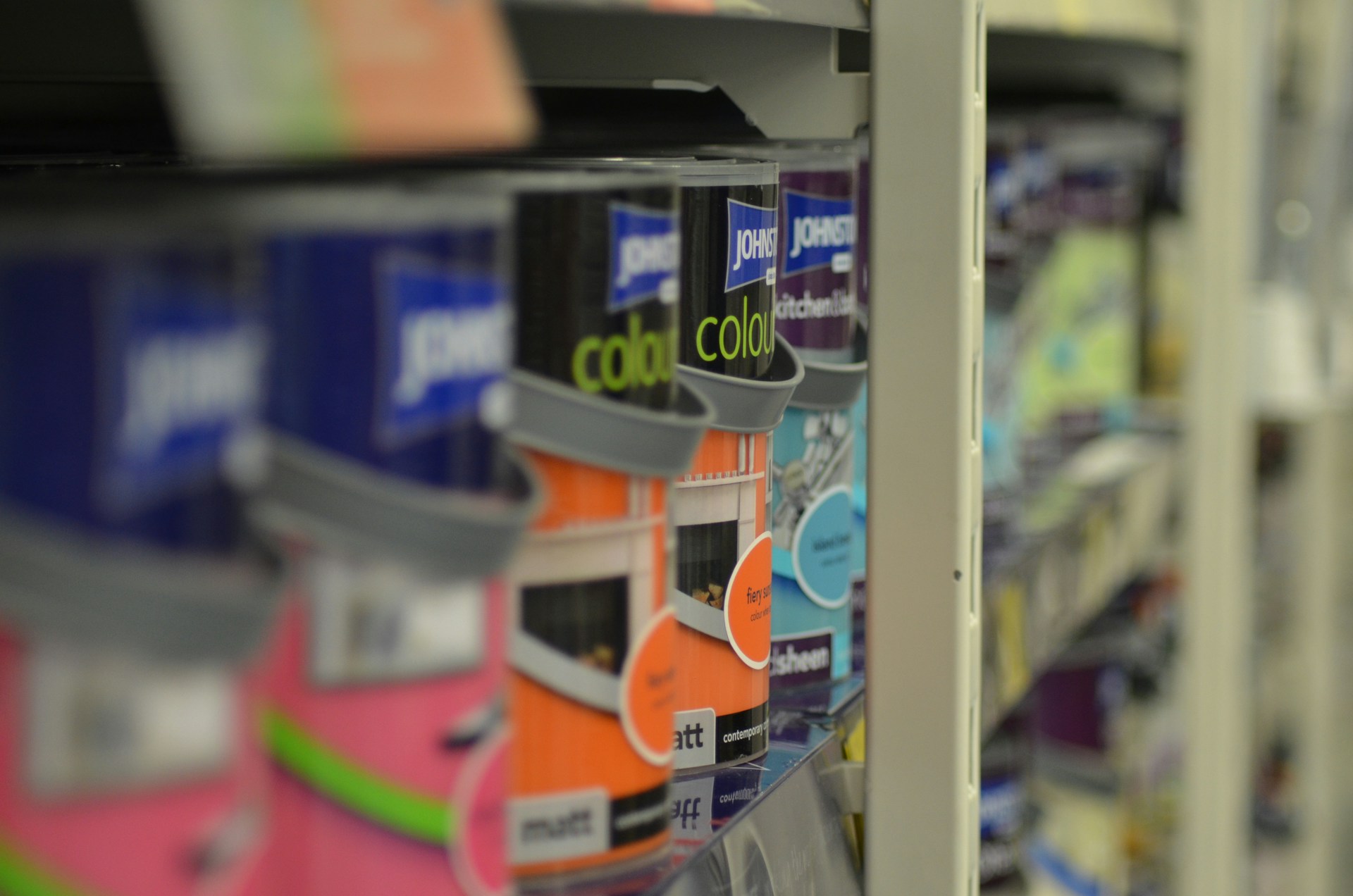
The In-Can Paradox: Biocide Restrictions, Climate Change and Paint Stability
biocide-regulation climate-resilience packaging-sustainability paint-formulation Solid Paint supply-chain-challengesOver the past decade, the coatings industry has found itself at a quiet yet profound technical crossroads. On the one hand, environmental and public health regulations demand drastic reductions in the use of chemical in-can preservatives. On the other, climate records show a sustained rise in global temperatures that accelerates the deterioration of aqueous solutions in warehouses.
This combination of factors is creating a growing problem in construction and decorating: the loss of commercial shelf stability in traditional liquid paints.
Understanding why a stored can of paint is more vulnerable today than it was twenty years ago requires examining the intersection of biocide regulation, microbial biology and logistics on a warmer planet.
- Regulatory Pressure: The Gradual Phase-Out of Preservatives
Water is the basis of modern emulsion paints, but it also provides the life-supporting medium that bacteria, fungi and yeasts need to reproduce. To prevent a can of liquid paint from decomposing, developing a foul odour or losing its viscosity, traditional formulations include in-can biocides (in-can preservatives).
For decades, compounds in the isothiazolinone family—such as methylisothiazolinone (MI) and benzisothiazolinone (BIT)—have been the industry standard because of their high antibacterial efficacy at low cost.
However, the European regulatory framework has changed the rules of the game:
- The Biocidal Products Regulation (BPR, Regulation (EU) No 528/2012): Imposes strict controls on substances used to protect manufactured products.
- Sensitisation labelling thresholds: The classification of MI as a Category 1A skin sensitiser forced brands to drastically reduce its approved concentration limits if they wanted to avoid allergy-risk warning labels on their containers.
The industry has been forced to reduce the doses of traditional biocides or replace them. However, reducing the can’s “chemical armour” leaves the aqueous mixture more exposed to microbiological contamination.
- The Climate Factor: Record Temperatures and Bacterial Proliferation
Voluntary and regulatory reductions in preservatives are compounded by an unavoidable external factor: global warming.
According to the World Meteorological Organization (WMO) and data from the Sustainable Development Goals Report (SDG Report), recent years have recorded the highest global average temperatures in history. The increase in heatwaves does not just affect outdoor conditions; it directly alters the internal temperature of logistics centres, warehouses and transport vehicles without climate control.
From an applied microbiology perspective:
- Bacterial kinetics: Most environmental bacteria that affect aqueous materials increase their reproduction rate exponentially when storage temperatures exceed 25 °C or 30 °C.
- Thickener degradation: Microorganisms consume the cellulosic molecules used to maintain paint viscosity, causing heavy pigments to settle rapidly at the bottom of the container.
- Gas generation and unpleasant odours: Metabolic activity generates volatile by-products that can cause airtight plastic containers to bulge or become deformed.
What was once a reliable shelf life of two or three years for a can of liquid paint is substantially reduced if the product travels along summer transport routes or passes through hot warehouses.
The Industry’s Dilemma: More Chemicals or a Shorter Shelf Life?
Coatings brands and manufacturers face a dilemma that is difficult to resolve within the conventional liquid model:
- If they increase biocides: They meet preservation requirements in warm climates, but incur sensitisation-related health risks, emit more volatile organic compounds (VOCs) or face labelling penalties under the European BPR.
- If they reduce biocides: They comply with environmental and respiratory health certifications, but increase the risk of paint spoiling before application, leading to greater commercial losses and more complaints from distributors or end customers.
The De-Mystifying Eco Paints report from the British Coatings Federation (BCF) emphasises that product durability and longevity are essential factors in genuine sustainability. Throwing away a can of paint spoiled by bacterial proliferation negates any environmental benefit its formulation may have offered.
- Rethinking Preservation
The problem lies not in chemistry’s inability to preserve products, but in the physics of packaging. Keeping stagnant water at room temperature for months in a closed container is a choice that inevitably requires continuous chemical preservation.
If we analyse the product’s life cycle from the outset, the key question is not which new biocide to authorise, but: does it make sense to keep water-rich products exposed to the planet’s temperature fluctuations?
When water is removed from the storage equation, bacteria lack the liquid medium they need to multiply. The risk of microbiological contamination disappears during transport and shelf storage, making the product immune to heatwaves without the need for additional in-can chemicals.
Stability That Does Not Depend on the Climate
Questioning the current model is the first step towards finding solutions that protect consumers, comply with environmental regulations and ensure maximum technical durability.
The evolution of conscious construction is not about choosing between health and durability, but about redesigning the system to guarantee both without compromise.
At ACTIVATE, we tackle this challenge at its root. Because ensuring a product that remains stable in any climate and is safe for use inside your home is the only way to transform how we paint.
👉 [Join the ACTIVIST community and get exclusive access to the Reveal]
Sources and Technical References
- Regulation (EU) No 528/2012 (BPR): Regulation concerning the making available on the market and use of biocidal products in the European Union. Labelling restrictions, concentration limits and sensitisation thresholds for isothiazolinones (MI, BIT, MCI).
- World Meteorological Organization (WMO) / UN SDG Report (2025/2026): State of the Global Climate. Figures on record global temperatures and the impact of heatwaves on supply chains and material storage.
- British Coatings Federation (BCF): De-Mystifying Eco Paints Guide. Criteria relating to durability, shelf life and assessment of the impact of raw materials in decorative products.
- Lundov MD et al. (2014) & ECHA (European Chemicals Agency): In-can preservation restrictions and microbial degradation in waterborne coatings. Documentation on the biological stability of aqueous emulsions and sensitisation caused by preservatives.
- ASTM D2243-20 / Technical Guidelines on Storage Stability: Standard methods for evaluating thermal stability, viscosity degradation and in-can preservation of waterborne coatings.